
Understanding Trach Tube Sizing: What the Numbers on Your Tube Mean
Key Takeaways
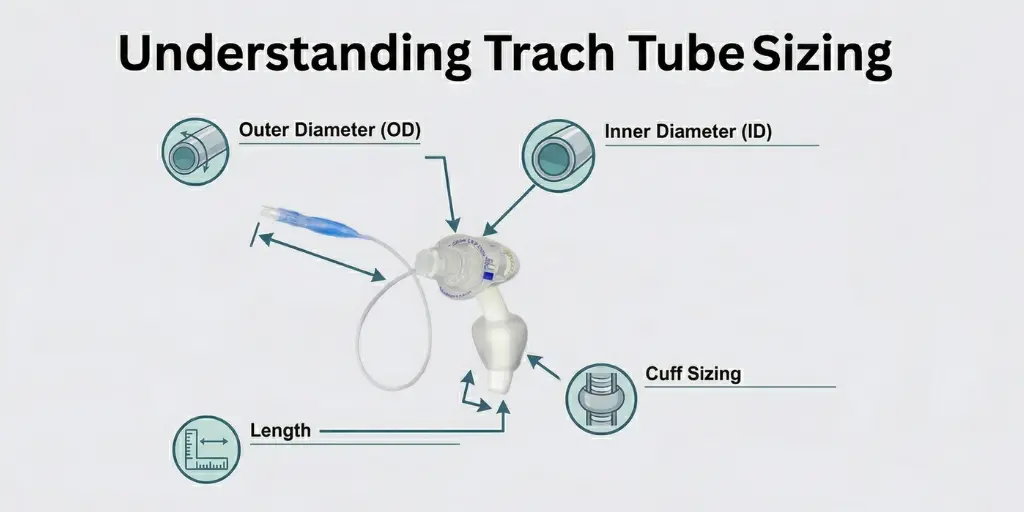
- Standardized Measurements: Trach tubes are sized by Inner Diameter (ID), Outer Diameter (OD), and Length.
- The “French” Scale: Suction catheters use the French (Fr) scale, which must be mathematically compatible with your trach tube size.
- Manufacturer Variations: Sizes like “Size 4” or “Size 6” can vary between brands, always check the millimeter (mm) measurements.
- Clinical Impact: A tube that is too large can cause tracheal damage, while a tube too small increases airway resistance.
Understanding the technical specifications of your equipment is vital for safe home care. When you look at the flange (the neck plate) of a tracheostomy tube, you will see a series of numbers that dictate how the device fits your anatomy and how you interact with your trach suction machine. Using the wrong size can lead to complications such as air leaks, pressure necrosis, or difficulty with cleaning a tracheostomy. By mastering these dimensions, you ensure that your tracheostomy supplies—specifically your inner cannulas and catheters—are perfectly matched to your specific tube.
Decoding the Millimeters: ID vs. OD
Most trach tubes are labeled with two primary millimeter measurements. Knowing the difference is crucial for effective respiratory care.
1. Inner Diameter (ID)
The ID is the measurement of the hole inside the tube. This number is critical because it determines how much air can pass through and what size trach suction machine catheter you can use.
- Common Adult Sizes: Usually range from 6.0 mm to 9.0 mm.
- Why it matters: A larger ID makes breathing easier but requires a larger stoma (opening in the neck).
2. Outer Diameter (OD)
The OD is the measurement of the outside of the tube. This determines how much space the tube takes up within your trachea (windpipe).
- Clinical Goal: The OD should ideally occupy about two-thirds to three-quarters of the tracheal lumen to allow for some airflow around the tube if the cuff is deflated.
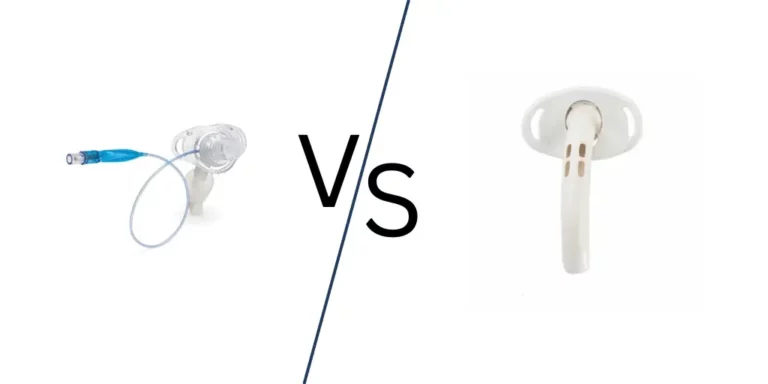
Read this blog to compare Cuffed vs. Uncuffed Tracheostomy Tubes and see which design is right for your clinical needs
The Suction Catheter Connection
One of the most common mistakes in tracheostomy care is using a suction catheter that is too large for the tube’s ID.
- The Rule of Thumb: The suction catheter should not occupy more than half of the inner diameter of the trach tube.
- The Formula: To find the correct French (Fr) size for your trach suction machine supplies:
- (Trach Tube ID – 2) x 2 = Max Catheter Size (Fr)
- Example: If you have an 8.0 mm ID tube: (8-2) x 2 = 12 Fr catheter.
Sizing and Insurance Coverage
Because your anatomy can change (due to weight loss, weight gain, or healing), your trach tube size may need to be adjusted by your surgeon or ENT.
- Standard Written Order: Medicare and private insurance require your doctor to specify the exact size and brand of trach supplies on your prescription.
- Supply Quantities: Insurance typically covers a specific number of inner cannulas and tracheostomy supplies per month based on the specific tube size and type (fenestrated vs. non-fenestrated).
FAQ: Trach Tube Sizing
Q1: Why does my Shiley Size 6 look different from a Portex Size 6?
A: “Size numbers” are not universal across brands. One brand’s Size 6 might have an 8.5 mm OD, while another’s might be 9.2 mm. Always refer to the ID and OD in millimeters (mm) when reordering tracheostomy supplies.
Q2: What happens if my trach tube is too long?
A: A tube that is too long can tickle the “carina” (where the trachea branches), causing a constant, violent cough. It can also lead to one-lung ventilation if it slides too far down.
Q3: Can the size change during cleaning a tracheostomy?
A: The size of the stoma doesn’t change instantly, but if a tube is left out for too long during cleaning a tracheostomy, the hole can begin to shrink (contract), making it difficult to reinsert the same size tube.
Q4: Do pediatric tubes use the same sizing?
A: Yes, but the scales are much smaller (usually 2.5 mm to 5.5 mm ID) and often do not have an inner cannula to maximize the available airway space.